


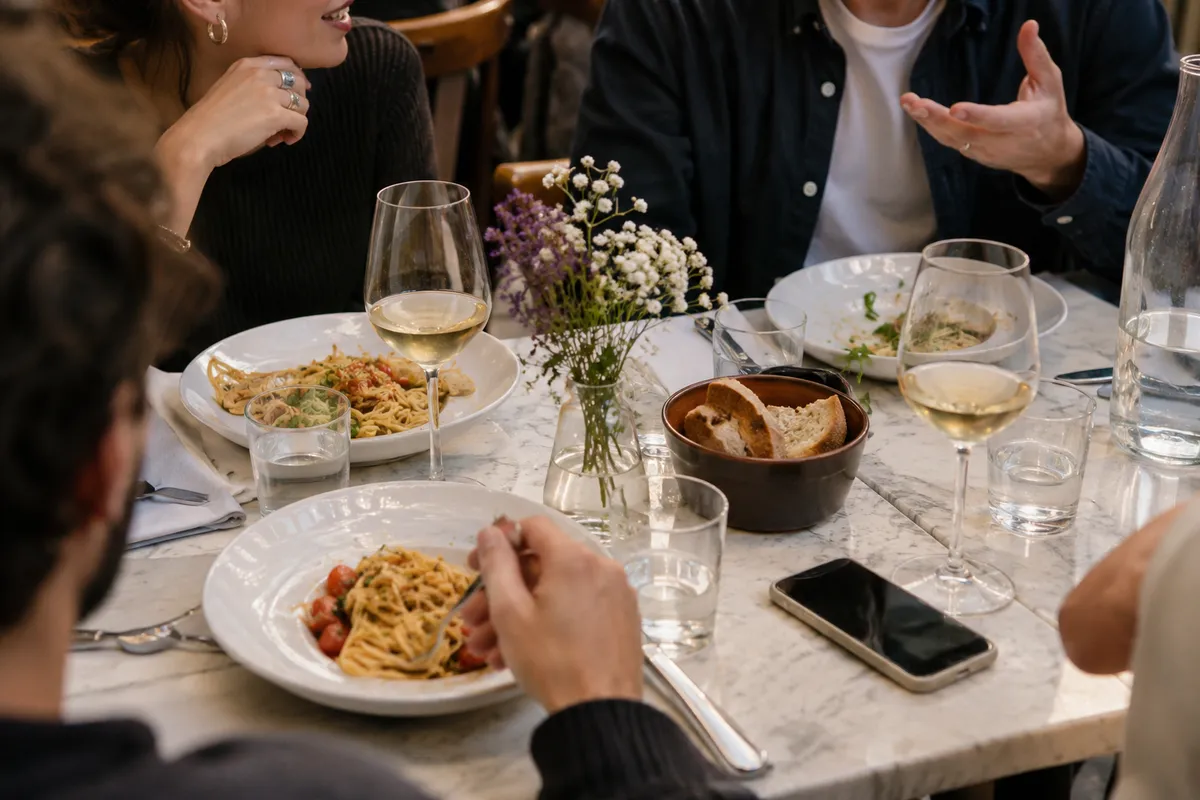
 Social life
There was a time when good table manners meant knowing which cutlery to use, keeping your elbows off the table and waiting until everyone had been served before starting to eat. Today, things are a little more complicated.
We can show up for dinner in jeans, photograph our food and split the bill using an app. Yet even in a much more informal setting, we still have fairly strong opinions about what we consider polite, annoying or simply inappropriate.
Modern dining etiquette reflects these changes. Traditional rules now coexist with new habits and, occasionally, with small dilemmas that didn't even exist a few decades ago.
From Formal Etiquette to Modern Manners
Etiquette has always reflected the society in which it developed. Table manners were shaped by the social hierarchies, conventions and everyday habits of their time.
Today, many formalities have lost their importance. Few people would be particularly shocked if someone rested their elbows on the table during dinner with friends or couldn't remember the correct arrangement of glasses.
What's interesting, however, is that while some rules have become more relaxed, others have emerged to take their place.
The Emily Post Institute, one of the best-known authorities on etiquette, continues to approach good manners as a way of making social interactions more pleasant rather than simply following a rigid set of formal rules.
After all, the way we behave at the table still says a great deal about us, even when we believe we're not following any particular etiquette.
Is the Smartphone the New Elbow on the Table?
There was a time when resting your elbows on the table was considered poor manners. Today, the smartphone is probably one of the most debated subjects in modern dining etiquette.
Some people leave it next to their glass, others check it between courses, and some simply can't resist photographing every dish before anyone has had a chance to taste it.
Phones have become such a natural part of everyday life that we often barely notice them. Yet during a shared meal, they can change the rhythm of a conversation.
Contemporary etiquette has addressed the issue too. According to the Emily Post Institute, it's generally preferable to keep phones away from the table during a meal, unless there's a particular reason to have one nearby.
Of course, taking a photo together or answering an urgent message won't ruin an evening. What matters most is the attention we give to the people sitting across from us.
Is Splitting the Bill Still the Best Idea?
Few moments at dinner reveal different opinions quite like the arrival of the bill.
Some people immediately suggest splitting everything equally, others prefer paying only for what they ordered, while some still see treating others as a thoughtful gesture.
Splitting the bill equally remains a familiar custom, but it now exists alongside other approaches, made easier by separate card payments and instant money transfers.
Things become particularly interesting when the people sharing a meal don't know each other very well. What seems like the most practical solution to one person might feel less natural to someone else.
There isn't one universally correct approach. Splitting equally can be convenient when everyone has ordered roughly the same amount, while paying individually may make more sense when orders differ significantly.
Perhaps the real etiquette of splitting the bill is simply finding an arrangement everyone feels comfortable with, without turning the final ten minutes of dinner into a complicated accounting exercise.
Punctuality, Photos and Other Everyday Habits
Modern etiquette also involves behaviours that rarely appeared in traditional etiquette books.
Think of someone who is consistently late, someone who spends most of dinner talking about themselves without giving others a chance to speak, or someone who posts a group photograph without checking whether everyone is happy to be included.
These familiar situations show just how closely good manners are connected to context and to the people with whom we share an experience.
The way we treat restaurant staff matters too. How we speak to servers, ask questions or respond to a small inconvenience can influence the atmosphere of an entire evening.
Good manners, after all, often reveal themselves through the least noticeable gestures.
When People Who Have Never Met Share a Table
Dinner with longtime friends often follows familiar patterns. We know who is always late, who will order dessert and who will inevitably suggest splitting the bill.
When we sit down with people we've never met before, those shared habits haven't yet developed.
It's an increasingly familiar experience thanks to social dining platforms such as Tablo, where users can organise gatherings or join shared tables at restaurants.
People of different ages, backgrounds and lifestyles come together, each bringing their own understanding of what makes a meal enjoyable.
And this is where etiquette takes on an interesting role. Good manners become a shared language, expressed through consideration, respect for others and the ability to enjoy a common space naturally.
Good Manners Never Really Go Out of Style
We'll probably continue debating who should pay the bill, whether it's appropriate to photograph a meal and how often it's acceptable to check a phone during dinner.
Habits change, just as the situations in which we meet people continue to evolve. Some rules disappear, others adapt, and new ones emerge alongside changing behaviours.
But one thing remains important across generations. The ability to notice and consider the people with whom we're sharing our time.
Perhaps that's the part of etiquette worth holding on to, even when we can no longer remember which fork to use first.
Keep reading
More articles and useful pages to discover Tablo.
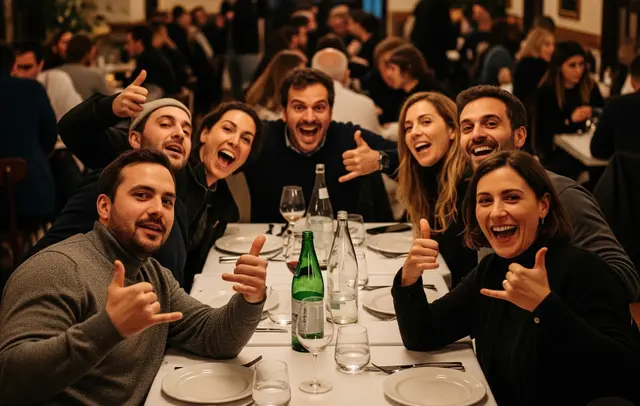 At the table
No more dining alone: join a Tablo table and turn any evening into a social experience.
Sei stanco di cenare da solo? Con Tablo puoi unirti a tavoli sociali nei ristoranti della tua città e trasformare una cena solitaria in un’esperienza conviviale. Scopri come funziona!
October 14, 2025
 Social life
Going Out Without a Plan. The Joy of Spontaneous Nights Out
Why does planning a night out feel so complicated? Between busy schedules and group chats, rediscover the pleasure of going out spontaneously.
October 28, 2026
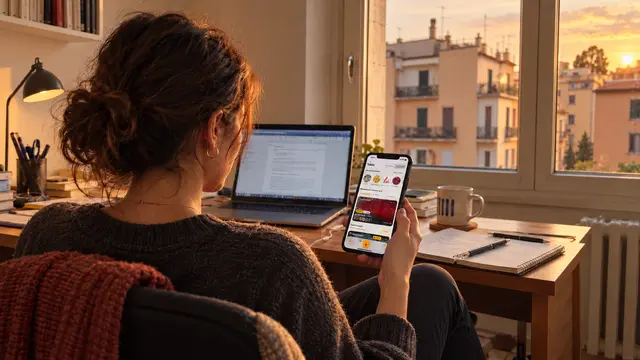 Friendship
Remote work and social life, how to meet people outside work
Working from home can mean fewer spontaneous encounters. Discover ways to make room for a social life and meet people near you with Tablo.
October 20, 2026
 Social life
When was the last time you did something for the first time?
Rediscover the joy of first times through new experiences and connections. Break out of familiar routines and find something new to enjoy with Tablo.
September 30, 2026
 Social life
Being bored together and rediscovering the value of time with friends
Time with friends doesn’t need a plan to feel meaningful. Discover what ordinary conversations and comfortable silences bring to friendship.
September 25, 2026
 Cities
What happened to the places where we used to meet people? The return of third places
What are third places and why do they still matter? From neighbourhood cafés to new ways of meeting people, discover how our social spaces are changing.
September 14, 2026
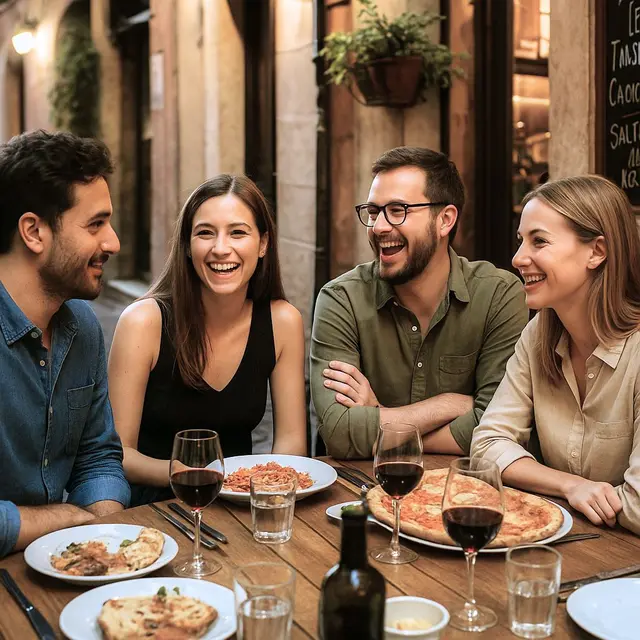 Cities
How to Make Friends in Rome? Easy: Download Tablo
Making friends in Rome is easier with Tablo: the app that lets you meet new people through dinners, shared tables, and events in the city’s best venues.
November 18, 2025
 Social life
Making Friends Online and Meeting in Real Life: Why Tablo Is Different from Other Apps
The best apps to make friends in Italy and abroad: discover Tablo, the app that helps people meet in real life.
November 04, 2025
Tables in Roma
Upcoming tables and partner venues in Roma.
DiscoverTables in Milano
Upcoming tables and partner venues in Milano.
DiscoverFAQs
How Tablo works: tables, bookings and safety.
DiscoverOur mission
Why we created Tablo and what drives us every day.
DiscoverAll articles
Stories, tips and news from the Tablo world.
DiscoverDo you own a venue?
Become a Tablo Point and welcome new groups to your tables.
Discover